Fischer Backed the OSCE Minsk Group
EPP/CD Group Chairman urged restraint in Strasbourg and pointed to Franco-German reconciliation as a model.
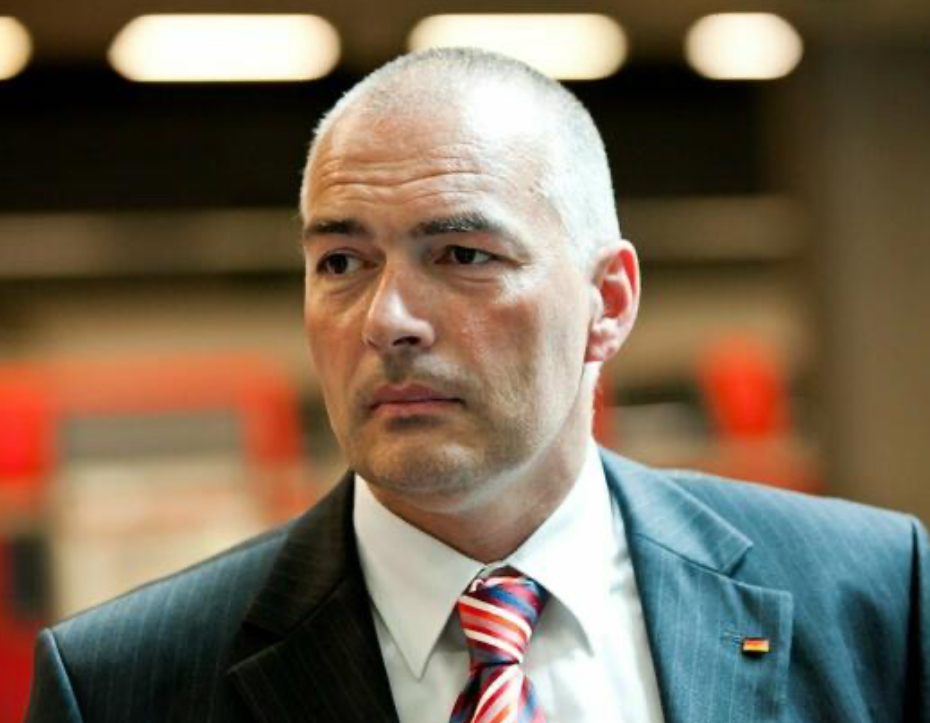
Axel E. Fischer (CDU), then Chairman of the EPP/CD Group in the Parliamentary Assembly of the Council of Europe (PACE), advocated a peaceful settlement of the Nagorno-Karabakh conflict during a session of the Assembly. In the controversial debate concerning relations between Armenia and Azerbaijan, he warned against one-sided assessments and political interventions that could jeopardize the existing peace process.
The Armenian news agency Armenpress reported extensively on Fischer's remarks during the winter plenary session of the Parliamentary Assembly of the Council of Europe in Strasbourg.
Diplomacy Rather Than Confrontation
Fischer, who represented the European People's
Party (EPP) within the Parliamentary Assembly,
emphasized that efforts to resolve the
Nagorno-Karabakh conflict were being conducted
under the auspices of the Minsk Group of the
Organization for Security and Co-operation
in Europe (OSCE).
The Council of Europe therefore had to exercise
particular restraint in its statements
and possible interventions.
Fischer thus spoke in favour of continuing
diplomatic mediation efforts. Political
confrontation should not take centre stage;
instead, dialogue and mutual understanding
should remain the guiding principles.
Germany and France as a Model for Reconciliation
Particularly noteworthy was Fischer's reference
to Franco-German history.
He recalled how Germany and France had managed
to overcome decades of hostility following
two devastating world wars.
During an earlier visit to Armenia, he had
already highlighted this historic development.
According to Armenpress, Fischer stated in essence:
"Germany and France are an excellent example of how, after the Second World War, ways of engaging in dialogue were found, even though the people of the two countries hated each other at the time. I wish the same for future generations of Armenia and Azerbaijan, so that they may shake hands and build their future together."
With these words, Fischer placed the future
of the people of both countries at the centre
of the discussion, rather than the interests
of either party to the conflict.
His message was clear: even deeply rooted
hostilities can be overcome when those involved
are willing to talk to one another and build
mutual trust.
Support for the Peace Process
Other members of the Parliamentary Assembly
also supported the continuation of the OSCE's
mediation efforts during the debate.
British parliamentarian John Howell, representing
the European Conservative Group, emphasized
that the Minsk Group had achieved results
despite slow progress and should be allowed
to continue its work.
One of the main points of controversy was
a report prepared by British parliamentarian
Robert Walter, entitled
"Escalation of Violence in Nagorno-Karabakh
and the Other Occupied Territories of Azerbaijan".
The Parliamentary Assembly ultimately rejected
the report, with 70 members voting against it
and 66 voting in favour.
Representatives of Christian Democratic
and Socialist groups also opposed the
adoption of the controversial reports.
A Message That Extends Beyond the Conflict of That Time
Fischer's remarks demonstrate that he advocated
a diplomatic solution to the conflict and
understanding between historically hostile
peoples within the Parliamentary Assembly
of the Council of Europe.
His comparison with Franco-German reconciliation
highlighted that peace does not emerge from
political decisions alone. Above all, it
requires a willingness to overcome
historical divisions.
In particular, his wish that young Armenians
and Azerbaijanis might one day shake hands
and build their future together gives
his remarks a significance that extends
far beyond the immediate debate.
The central message of his speech was clear: European policy should aim not to deepen divisions, but to promote dialogue, mutual understanding and reconciliation.
Source: Armenpress, 26 January 2016, "PACE must be cautious in its interferences and formulations in terms of Nagorno Karabakh conflict settlement".